

Yanir Ritter’s Graduation Concert
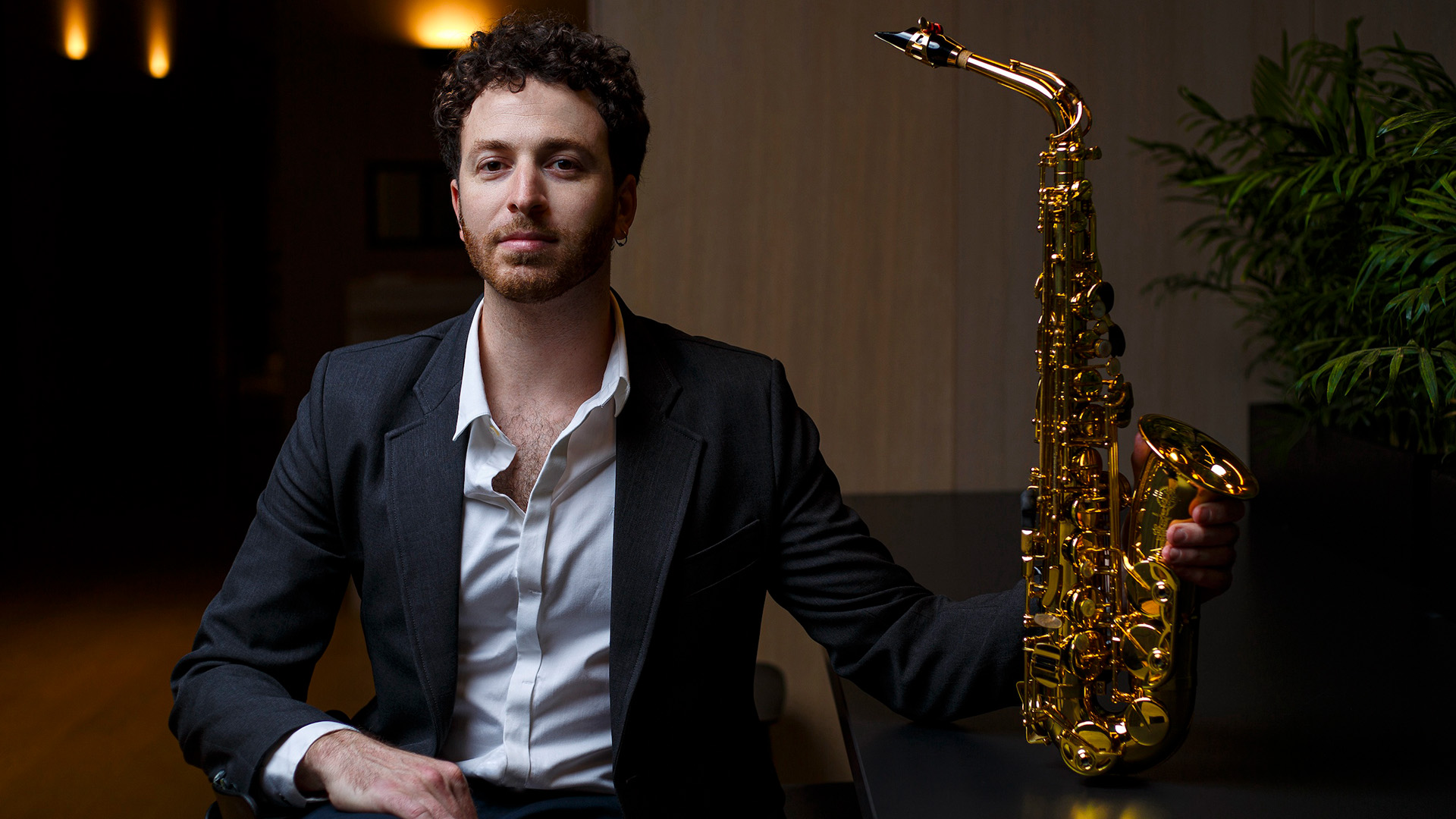
This recital presents original works for saxophone written between 1932 and 1940, a decisive moment in which the instrument shifted from being a symbol of artistic freedom and modernity during the Weimar Republic to becoming increasingly marginalized and stigmatized under the cultural policies of the Third Reich.
Featuring music by Edmund von Borck, Hans Brehme, Erwin Schulhoff, Werner Wolf Glaser, and Viktor Ullmann, the programme brings together a rarely performed Central European saxophone repertoire shaped by modernist experimentation, exile, and political pressure. Moving between chamber music and orchestral thinking, these works reveal how composers continued to explore the expressive possibilities of the saxophone at a time when its place in classical musical life was becoming uncertain.
The recital forms part of an artistic doctoral research project at Freiburg University of Music and the University of Strasbourg, investigating the role of the saxophone in Germany during the 1930s and 1940s as both a musical voice and a cultural symbol of resistance within the ideological context of the period.
Yanir Ritter
Yanir Ritter is an Israeli concert saxophonist specializing in classical and contemporary repertoire for the saxophone. As a soloist and chamber musician, he is a laureate of several international competitions, including the America-Israel Cultural Foundation (AICF), the Ferrera Competition, the Cantarone Competition for Young Soloists, and the Salieri-Zinetti Competition.
He has performed with the Israel Philharmonic Orchestra, the Israel Opera Orchestra, the Orchestra of La Scala (Milan), the Orchestra dell’Accademia Nazionale di Santa Cecilia (Rome), the Strasbourg Philharmonic Orchestra, and La Monnaie (Brussels), among others.
He performs regularly with several chamber ensembles, including the Aurea Duo (saxophone and organ), the No Limit Orchestra, the RE/SONO Saxophone Quartet, and the Tel Aviv Saxophone Quartet. In collaboration with the Israeli Ministry of Education, he is involved in projects supporting the development of classical saxophone practice among young musicians in Israel.
He is currently pursuing a doctoral degree jointly at the University of Strasbourg and Freiburg University of Music within the European Doctoral College of Musical Performance and Creation. His research focuses on the role of the saxophone in Germany during the 1930s and 1940s and its cultural and political significance in this historical context.


Program
Edmund von Borck → Concerto for Alto Saxophone and Piano (1932)
Hans Brehme → Sonata for Alto Saxophone and Piano (1932) Nos. I und III
Erwin Schulhoff → Valse brillante, Dance excentrique (1933)
Werner Wolf Glaser → 3 Sonatas in the Old Style (1934) Nos. I and III
Viktor Ullmann → Slavonic Rhapsody (1940) – Excerpts